












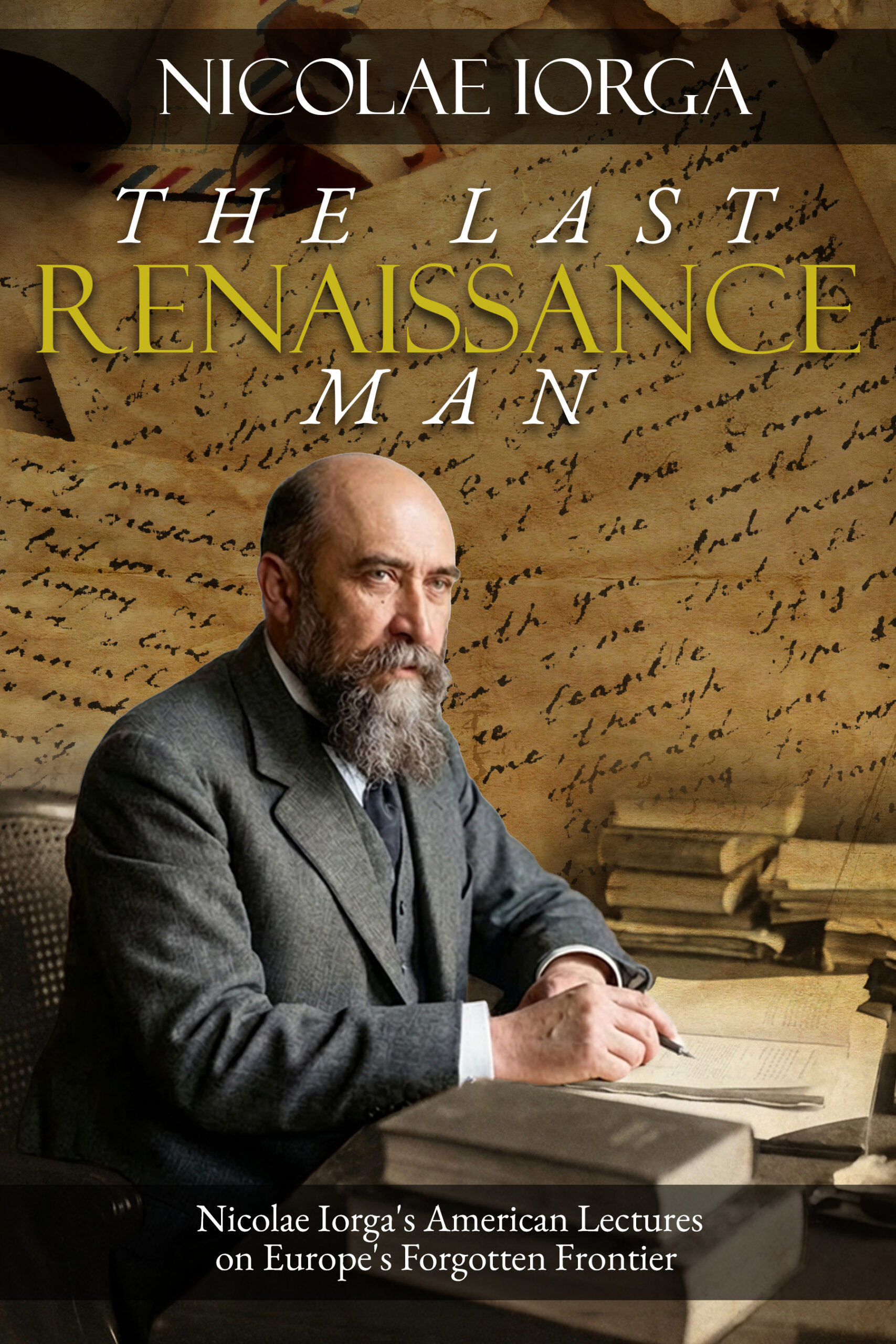
The Last Renaissance Man
$29.99
is available for preorder. It will ship on or before its release date of September 29, 2026. A rigorous historiographical examination of the Romanian synthesis, analyzing the interplay of Byzantine tradition, agrarian social structures, and the emergence of national identity within the complex...
- ISBN
- 9781592118021
- Format
- Hardcover
Available on backorder
About This Book
The Last Renaissance Man by Nicolae Iorga is available for preorder. It will ship on or before its release date of
A rigorous historiographical examination of the Romanian synthesis, analyzing the interplay of Byzantine tradition, agrarian social structures, and the emergence of national identity within the complex geopolitical landscape of Southeastern Europe.
This volume presents a significant scholarly contribution from Nicolae Iorga, situating Romanian history within the broader context of Southeastern European cultural and political morphology. Iorga, a preeminent historian and intellectual figure of the early twentieth century, employs a syncretic approach to explore the evolution of the Romanian principalities, moving beyond mere chronology to analyze the underlying forces of national development and cultural persistence.
The analysis investigates the organic structures of Romanian agrarian society, positing the free peasant community and its customary laws as the bedrock of national continuity. Iorga examines the distinctive character of the Romanian Orthodox Church as a vernacular, autonomous institution, contrasting its development with external Catholic and Protestant influences. Furthermore, the text offers a sophisticated treatment of Byzantine artistic heritage, detailing its local adaptations in Moldavian and Wallachian ecclesiastical architecture as expressions of a unique cultural synthesis.
The work also provides critical historiographical reflections, contrasting Iorga’s own methodology—emphasizing moral factors and organic historical development—with prevailing positivist and materialistic schools of thought. It offers a nuanced evaluation of the region's complex geopolitics, tracing the long transition from Ottoman suzerainty to the challenges of modern state-building and competing nationalisms in the Balkans.
More by Nicolae Iorga

Customer Reviews
Please log in or create an account to leave a review.
You May Also Like
 Byzantium after Byzantium: Nicolae Iorga$29.99
 The Diplomatic Struggle over Bessarabia$29.99
 Assignment Bucharest: An American Diplomat’s View of the Communist Takeover of Romania$29.99
 Essays on Romanian History by Radu R. Florescu$24.99
 Henri Mathias Berthelot: Soldier of France, Defender of Romania$49.99